I · Symbols
Symbol Sourcebook
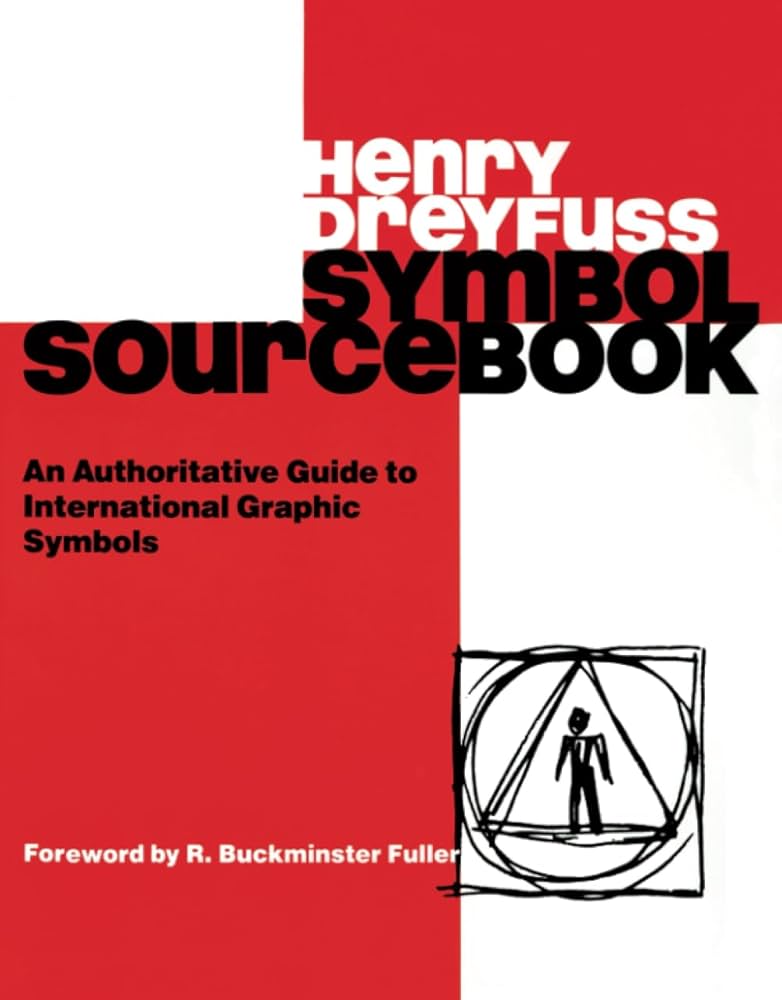
A dictionary of the marks humanity uses to tell itself what to do. Once you see the grid, the built world stops looking neutral.
What it argues
Dreyfuss was an industrial designer, not an occultist. He spent decades collecting more than 20,000 symbols — alchemical signs, hobo chalk, astronomy, safety markings, corporate identity, religious glyphs — and arranged them by function. His argument is that symbols are a technology: they compress instructions, warnings, identities and cosmologies into marks that bypass language. A triangle is not decorative; it is an instruction to the nervous system.
Dreyfuss treats symbols as a universal grammar. The book is a reminder that grammar can be standardized, taught, and enforced.
Why it's dangerous knowledge
Because it shows how meaning is installed. Every logo, wayfinding sign, warning icon and corporate mark is an attempt to put a shortcut in your head. The same geometry can mean “danger” on a road, “attention” in a ritual, “brand” in a boardroom. Once you can read the grid, you see the seams — and you notice who benefits when a symbol becomes invisible through familiarity.
The book is also a warning about curation: a symbol ripped from context can be made to mean almost anything. That is the mechanism behind both advertising and conspiracy aesthetics.
Read next
Propaganda shows how symbols are scaled into mass belief. Simulacra and Simulation explains what happens when the sign replaces the thing it was supposed to point to.