VI · Simulation
Simulacra and Simulation
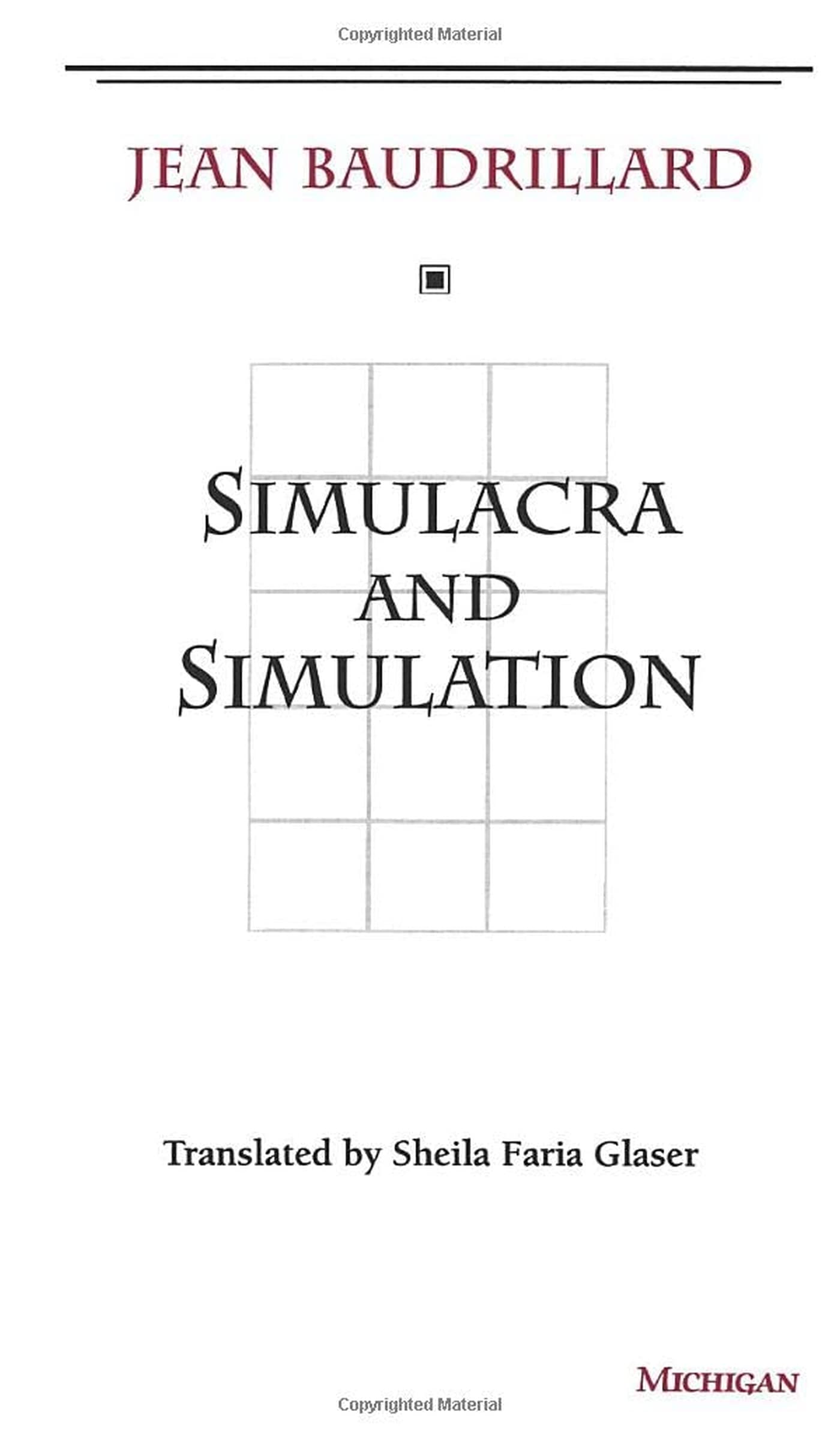
Why the copy feels more real than the original — and what that does to politics, news, and conspiracy.
What it argues
Baudrillard argues that we have replaced reality with copies of copies. The map precedes the territory; signs circulate without referents; the image becomes the event. Disneyland, news, advertising, and conspiracy theories all operate in hyperreality — a world where the model is more convincing than the thing it models.
The book is dense, aphoristic, and deliberately unsettling. It is not a theory of everything; it is a description of a specific late-modern condition.
Why it's dangerous knowledge
It explains why the most convincing story wins, and why “do your own research” can lead deeper into the simulation. It is a weapon against naive realism — and a trap if you conclude that nothing is real.
The political danger: when everything is a simulation, nothing is accountable. The book gives you vocabulary for the mechanism; it does not give you permission to stop looking for the referent.
Read next
Prometheus Rising shows how a reality tunnel is built from the inside. Propaganda shows who builds it from the outside.