08 · Rule & resistance
The Prince
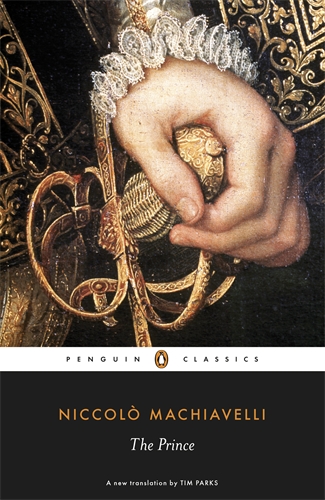
Mussolini reread it. Rousseau interpreted it as a warning to the ruled. Frederick wrote a rebuttal.
Penguin Classics · translated by Tim Parks · paperback
ISBN 9780141442259 · Publisher’s edition details ↗
Amazon affiliate link. The historical readers used other editions or languages.
Why read it now
Fear, loyalty, appearances, and the problem of holding power. The disagreement among its readers is part of the reason to read it.
Where to start
A compact book. Begin with chapters XV–XVIII, then read from the beginning to see what those famous passages leave out.
The reading record
Author’s own essay
Benito Mussolini
His 1924 prelude explicitly says he carefully reread The Prince.
Mussolini, “Prelude to Machiavelli” (1924) ↗
Contemporary English translation, The Living Age, 22 November 1924, pp. 420–423; essay originally published 30 April 1924
Published textual response
Jean-Jacques Rousseau
Rousseau explicitly interprets The Prince as exposing rulers to their subjects.
The Social Contract (1762) ↗
Book III, chapter 6, “Monarchy”
Published rebuttal
Frederick II of Prussia
Anti-Machiavel responds to Machiavelli chapter by chapter; this institutional edition reproduces chapter XVIII.
Anti-Machiavel (1740; English translation 1741) ↗
Chapter XVIII, primary excerpt at the German Historical Institute
What the evidence establishes
These sources establish reading or detailed textual engagement. They do not establish agreement. We do not rely on purported annotations attributed to Napoleon.
Checked 5 November 2026. Primary texts may be presented in later editions or translations. Read the research method and excluded claims.